Choosing the right train for your amusement park is a major investment decision. Many park owners struggle with this choice due to the variety of options available. The wrong choice can impact visitor experience and operational costs for years. I faced this challenge when expanding my own amusement facilities.
The best amusement park train combines reliability, passenger capacity, safety features, and thematic appeal that matches your park’s identity. Key selection factors include train type, power source, passenger capacity, customization options, and long-term maintenance requirements. A well-chosen train enhances visitor experience while minimizing operational costs.
Selecting the perfect train requires understanding your park’s specific needs. Different attractions require different train characteristics. The ideal choice balances functionality with aesthetic appeal. Let me share insights from my years in the amusement industry.
What make an attraction train ride “the best”?
Park operators often wonder what defines a truly outstanding train ride. Many focus only on appearance or price. However, the best trains excel in multiple dimensions. They provide memorable experiences while being operationally efficient.
The best amusement park trains excel in safety, reliability, passenger comfort, thematic integration, and operational efficiency. They should have proven safety records, comfortable seating, smooth operation, low maintenance requirements, and design that enhances your park’s theme. The best trains create memorable experiences while being cost-effective to operate.
Defining Excellence in Park Trains
I’ve evaluated hundreds of trains over my career. The truly exceptional ones share certain qualities that set them apart from average models.
Key Performance Indicators
Outstanding trains consistently deliver on these metrics:
- Safety Record: Accident-free operation history
- Uptime Percentage: Minimum 95% operational availability
- Passenger Satisfaction: High scores in visitor surveys
- Maintenance Costs: Predictable and reasonable service expenses
- Energy Efficiency: Optimized power consumption
- Durability: Long service life with minimal degradation
Quality Assessment Framework
Evaluate trains using this comprehensive framework:
| Category | Weight | Key Metrics |
|---|---|---|
| Safety | 30% | Certification compliance, accident history, safety features |
| Reliability | 25% | Uptime percentage, breakdown frequency, repair times |
| Passenger Experience | 20% | Comfort ratings, boarding efficiency, ride smoothness |
| Operational Efficiency | 15% | Energy consumption, staffing requirements, maintenance costs |
| Thematic Integration | 10% | Design coherence, brand alignment, visual appeal |
Real-world Success Factors
From my experience, the best trains share these operational characteristics:
- Consistent performance across different weather conditions
- Easy maintenance access for daily inspections
- Simple operator controls with comprehensive training
- Robust construction that withstands heavy usage
- Flexible capacity that matches visitor flow patterns
My own park’s most successful train has operated for eight years with only routine maintenance. Its reliability has become a key attraction feature.
What are the types for amusement park train?
Understanding train types is essential for making informed choices. The amusement industry offers several train categories. Each type serves different purposes and suits different park layouts.
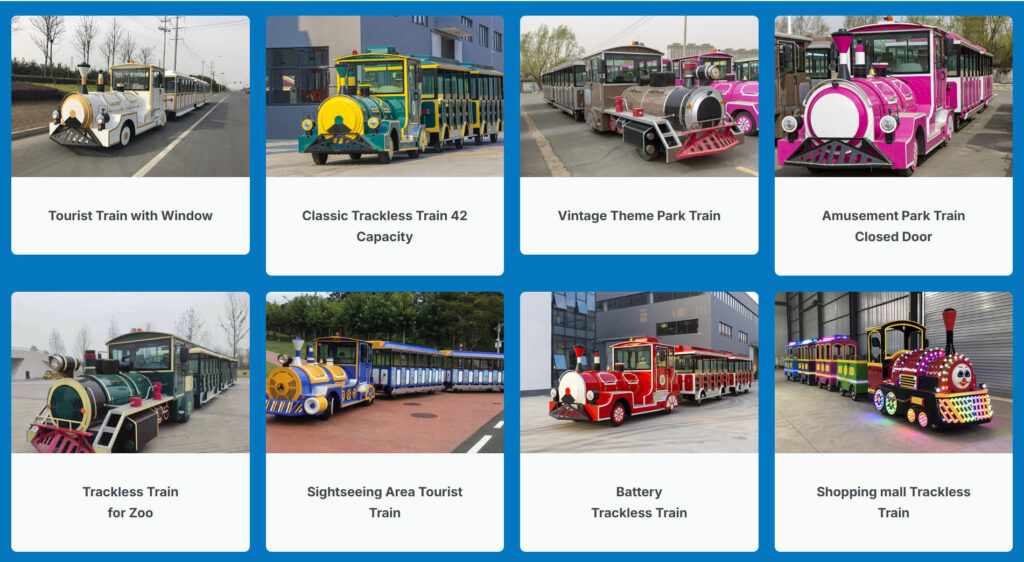
Amusement park trains come in track-based and trackless varieties, with further classification by power source and design. Major types include traditional steam trains, modern diesel trains, electric trains, trackless trains, and miniature railways. Each type offers different capacities, operational characteristics, and thematic possibilities.
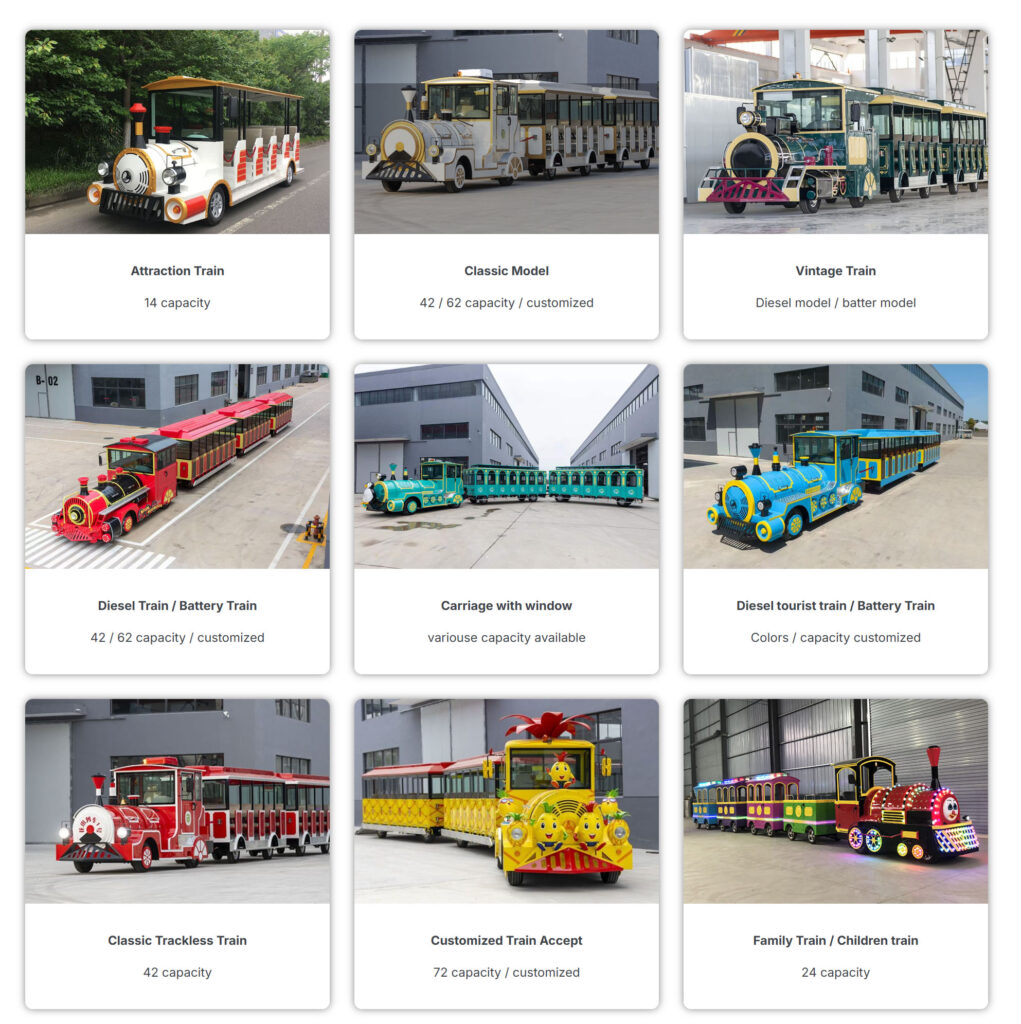
Comprehensive Train Classification
I’ve worked with all major train types throughout my career. Understanding their differences helps match the right train to your park’s needs.
Classification by Track System
The fundamental division is between track-based and trackless systems:
Track-Based Trains
- Require permanent rail installation
- Offer precise routing and scheduling
- Higher initial infrastructure cost
- Excellent for large parks with fixed routes
- Includes steam, diesel, and electric locomotives
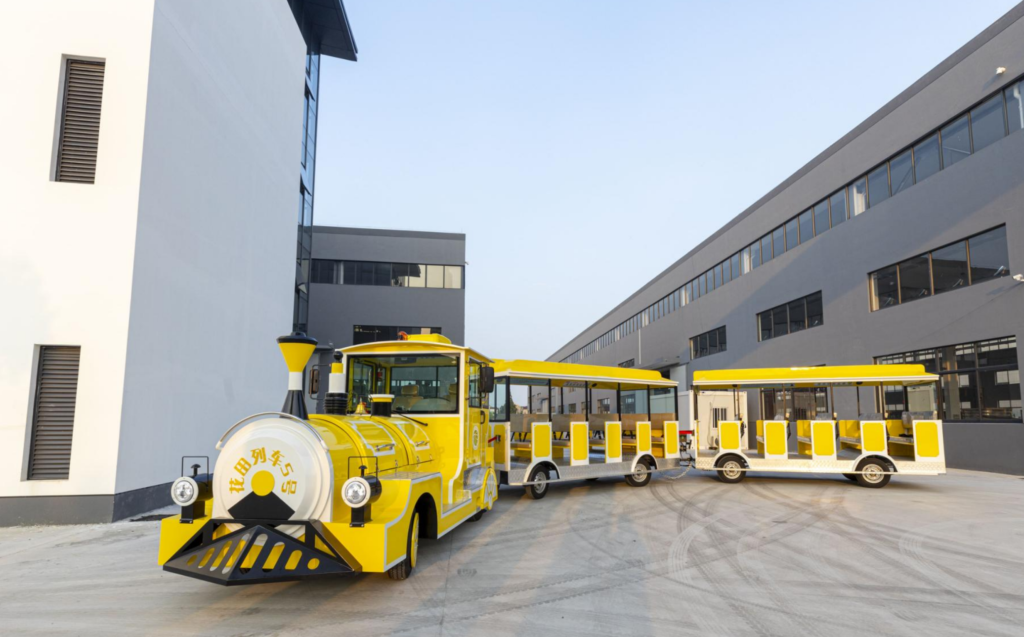
Trackless Trains
- Operate on existing roads or paths
- Flexible routing and easy route changes
- Lower infrastructure requirements
- Ideal for parks with seasonal layout changes
- Includes battery-powered and diesel-powered models
Classification by Power Source
Power choice impacts operational costs and environmental considerations:
| Power Type | Pros | Cons | Best For |
|---|---|---|---|
| Diesel | High power, long range | Emissions, noise | Large parks, hilly terrain |
| Electric | Quiet, zero emissions | Limited range, charging time | Indoor use, eco-friendly parks |
| Battery | Flexible, low operating cost | Battery replacement costs | Medium-sized parks |
| Steam | Classic appeal, tourist attraction | High maintenance, specialized staff | Heritage parks, themed areas |
Specialized Train Types
Beyond basic classifications, specialized models exist:
- Miniature Railways: Scaled-down versions for children’s areas
- Sightseeing Trains: Open-air designs for scenic routes
- Themed Trains: Custom designs matching specific park themes
- Accessible Trains: Modified for wheelchair access and special needs
My experience shows that hybrid solutions often work best. Many parks combine track-based mainline trains with trackless shuttle services.
What is the different between electric train and diesel train?
The choice between electric and diesel power is a critical decision. Each option has distinct advantages and limitations. Understanding these differences ensures optimal selection for your specific requirements.
Electric trains operate quietly with zero emissions, making them ideal for indoor use and eco-friendly parks, but require charging infrastructure and have limited range. Diesel trains offer greater power and unlimited range, suitable for large outdoor parks, but produce emissions and noise that may not suit all environments.
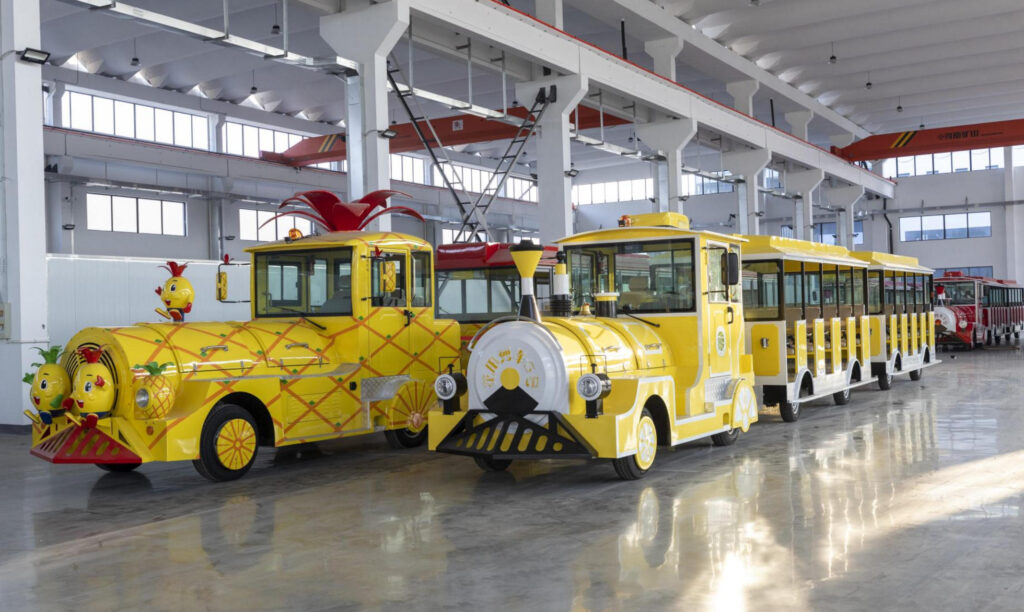
Detailed Power Source Analysis
I’ve operated both electric and diesel trains in various park settings. Each has specific operational characteristics that influence their suitability.
Performance Comparison
Direct comparison reveals significant operational differences:
Electric Train Performance
- Acceleration: Smooth and rapid from standstill
- Top Speed: Typically 10-15 km/h for safety
- Grade Ability: Good on moderate inclines
- Noise Level: Very low (45-55 dB)
- Emissions: Zero direct emissions
Diesel Train Performance
- Acceleration: Gradual but powerful
- Top Speed: 15-25 km/h depending on model
- Grade Ability: Excellent on steep inclines
- Noise Level: Moderate to high (65-80 dB)
- Emissions: CO2 and particulate emissions
Operational Cost Analysis
Long-term costs vary significantly between power types:
| Cost Category | Electric Train | Diesel Train |
|---|---|---|
| Fuel/Energy | $0.15-0.30 per km | $0.40-0.80 per km |
| Maintenance | Lower (fewer moving parts) | Higher (engine maintenance) |
| Infrastructure | Charging stations needed | Fuel storage required |
| Staff Training | Standard electrical knowledge | Diesel engine expertise |
| Environmental | Potential carbon credits | Emissions compliance costs |
Environmental and Regulatory Considerations
Environmental factors increasingly influence train selection:
- Electric Trains: Zero local emissions, qualify for green certifications
- Diesel Trains: Require emissions controls, may face future restrictions
- Noise Regulations: Electric trains meet strict indoor noise limits
- Air Quality: Diesel trains unsuitable for enclosed spaces
- Sustainability Goals: Electric trains support environmental initiatives
My parks use electric trains for indoor areas and diesel for extensive outdoor routes. This hybrid approach balances environmental concerns with operational needs.
How to choose the right model ?
Selecting the perfect train model requires systematic evaluation. The right choice depends on your park’s specific characteristics and operational requirements. A methodical approach prevents costly mistakes.
Choose the right amusement park train model by analyzing your park’s size, visitor demographics, operational requirements, budget constraints, and thematic needs. Consider capacity requirements, power source suitability, maintenance capabilities, customization options, and long-term operational costs before making a final decision.
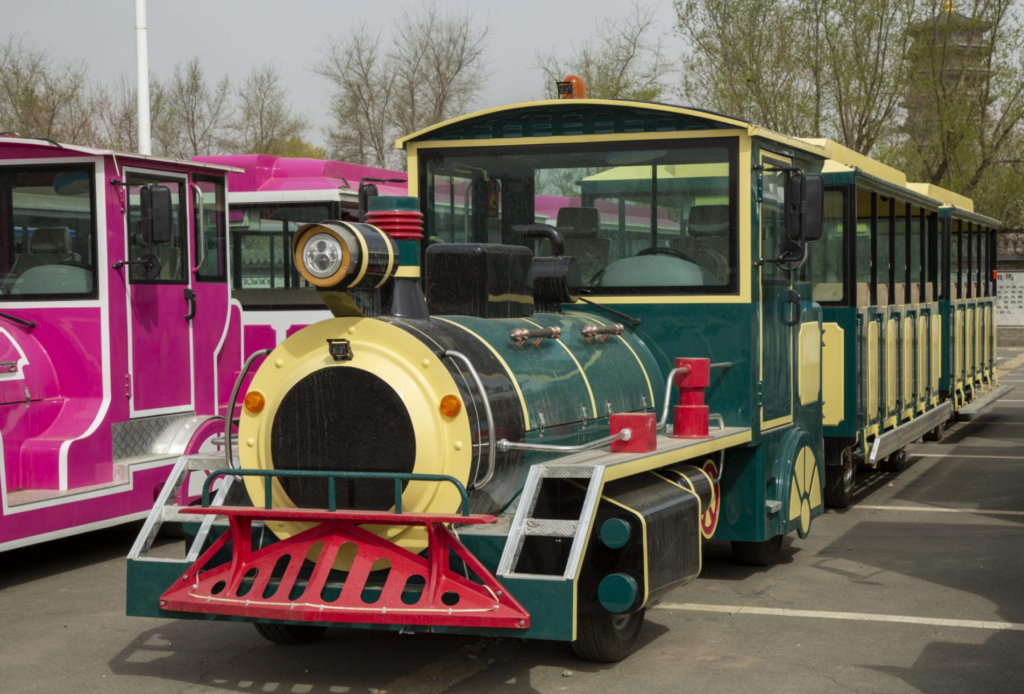
Comprehensive Selection Methodology
I’ve developed a proven selection process that considers all critical factors. This methodology has helped many park owners make informed decisions.
Step-by-Step Selection Process
Follow this systematic approach for optimal results:
Step 1: Needs Assessment
- Analyze peak visitor numbers and flow patterns
- Measure route distances and terrain challenges
- Identify thematic requirements and branding needs
- Assess existing infrastructure limitations
- Define operational hours and seasonality
Step 2: Technical Evaluation
- Determine required passenger capacity (24, 42, or custom)
- Evaluate power source suitability for your environment
- Assess maintenance facility capabilities
- Consider staff skill levels and training needs
- Review safety and certification requirements
Step 3: Financial Analysis
- Calculate total cost of ownership over 5-10 years
- Compare initial investment vs operational expenses
- Evaluate financing options and payment terms
- Consider revenue generation potential
- Assess resale value and depreciation
Decision Matrix for Model Comparison
Use this matrix to compare potential models objectively:
| Evaluation Factor | Weight | Model A | Model B | Model C |
|---|---|---|---|---|
| Purchase Price | 15% | Score | Score | Score |
| Operating Cost | 20% | Score | Score | Score |
| Passenger Capacity | 15% | Score | Score | Score |
| Thematic Fit | 10% | Score | Score | Score |
| Maintenance Needs | 15% | Score | Score | Score |
| Safety Features | 15% | Score | Score | Score |
| Manufacturer Support | 10% | Score | Score | Score |
| Total Score | 100% | Total | Total | Total |
Implementation Considerations
After selection, focus on successful implementation:
- Develop comprehensive operator training programs
- Establish preventive maintenance schedules
- Create emergency response procedures
- Plan for seasonal storage and preparation
- Set up performance monitoring systems
My most successful train selection involved months of research and multiple manufacturer visits. The result was a train that perfectly matched our park’s needs and continues to perform excellently.
Conclusion
Choosing the best amusement park train requires careful analysis of your specific needs and thorough evaluation of available options. The right choice enhances visitor experience while ensuring operational efficiency.