Many theme park owners and tourism operators are asking this question. Finding reliable trackless train suppliers in China can be challenging. The process involves quality verification, price negotiation, and logistics planning. I understand these concerns because I had similar experiences when starting my amusement business.
Purchasing a trackless train from China involves selecting certified manufacturers, evaluating custom options, arranging payment terms, and organizing international shipping. You need to verify supplier credentials, request product certifications1, negotiate pricing based on capacity and features, and plan logistics from factory to your location.
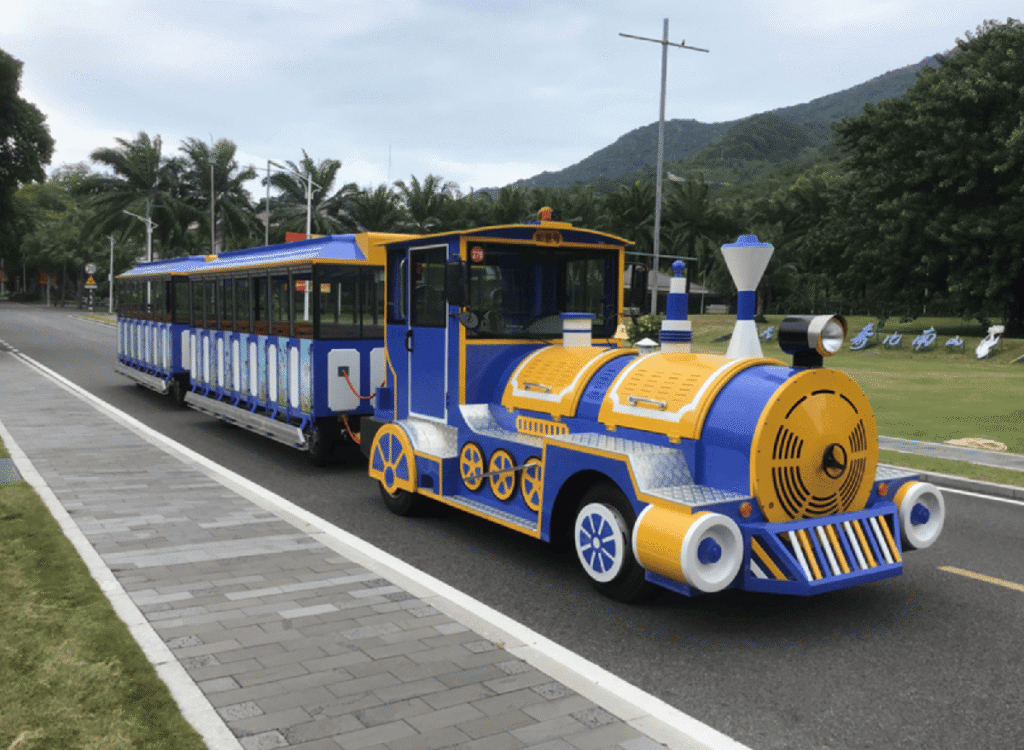
Choosing the right supplier is crucial for long-term success. Reliable manufacturers provide quality products with proper certifications. Customization options allow you to match your park’s theme perfectly. Let me guide you through the complete purchasing process.
Can a trackless train ride on the street?
Park operators often wonder about street operation possibilities. Many assume trackless trains are limited to private properties. This misconception can limit their business potential. Properly equipped trains can indeed operate on public roads with the right approvals.2
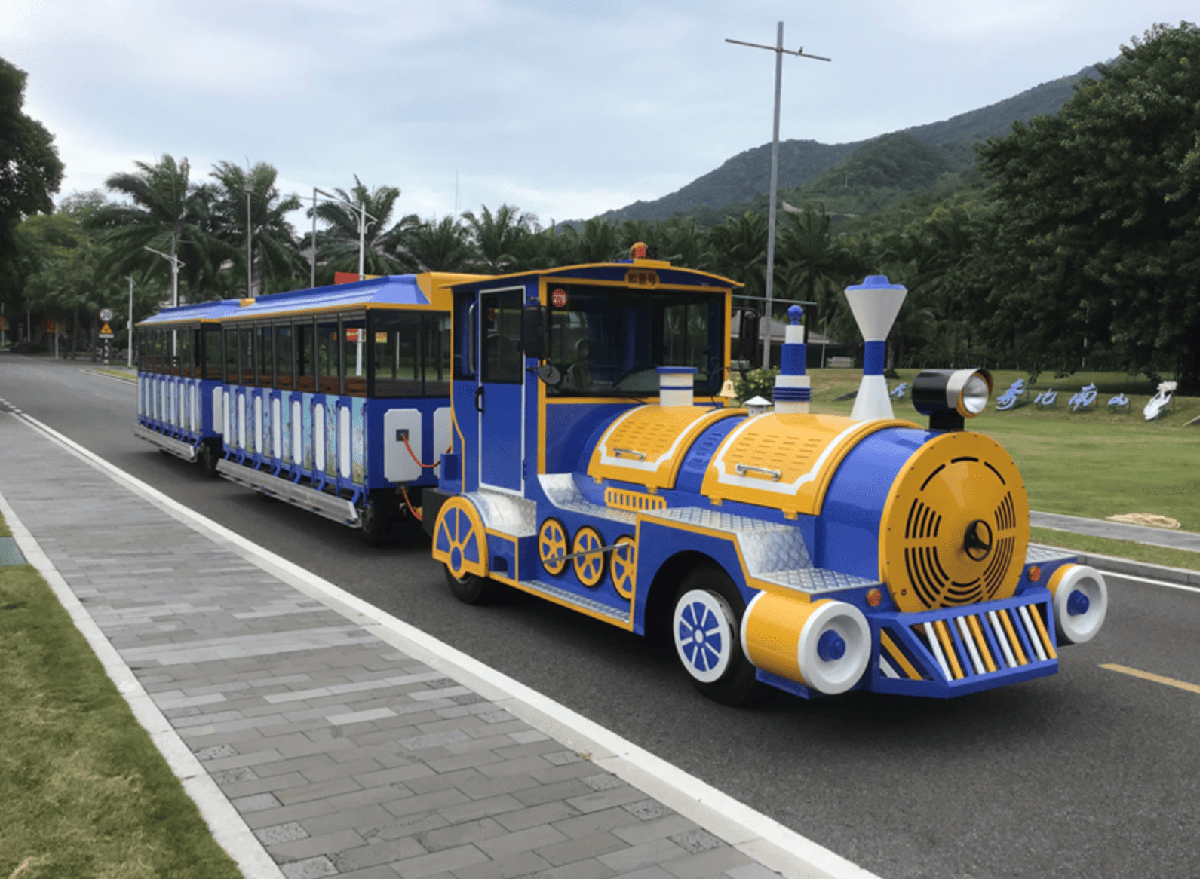
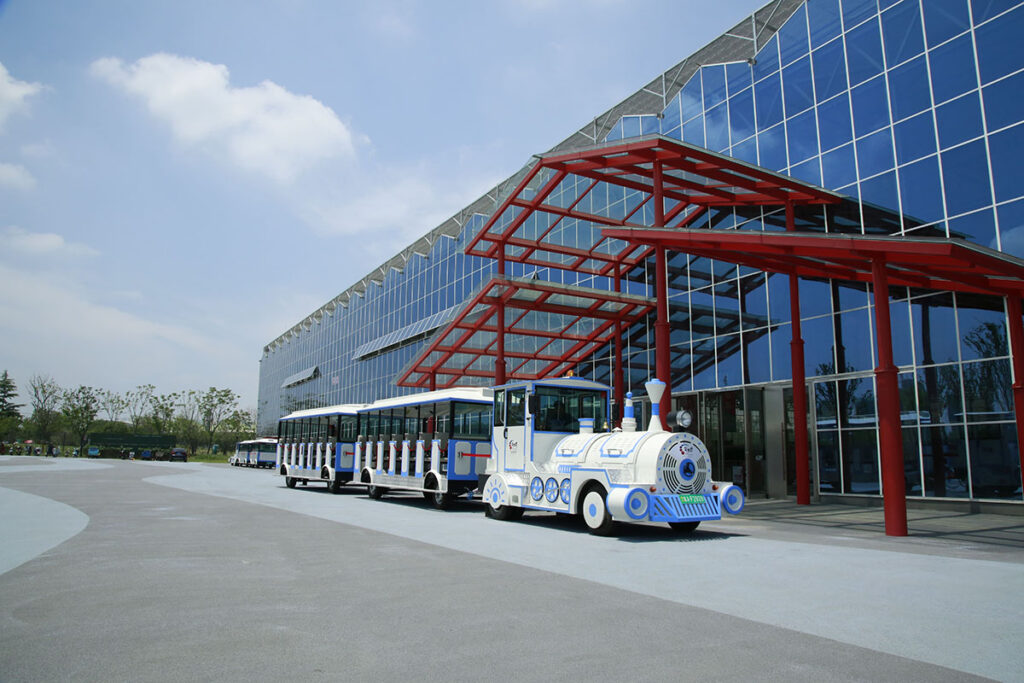
Trackless trains can operate on streets when they meet specific safety standards and obtain necessary permits. They must have proper lighting, signaling equipment, and safety certifications. Road operation requires approval from local transportation authorities and compliance with traffic regulations.
Understanding Street Operation Requirements
I learned about street operation through personal experience. Our first trackless train purchase was for a botanical garden that wanted to connect multiple attractions across public roads. The process taught me valuable lessons about regulatory compliance.
Equipment Requirements for Street Operation
Road-legal trackless trains need specific safety features. These include:3
- Turn signals and brake lights
- Horn or audible warning device
- Rearview mirrors
- Speed limitation devices
- Emergency braking systems
- Reflective markings and safety lighting
Certification and Documentation
Every country has different certification standards. For US operations, you typically need:
- Department of Transportation compliance
- Environmental Protection Agency certification for emissions
- Local business permits and operating licenses
- Insurance coverage for passenger transportation
Operational Considerations
Street operation presents unique challenges. You must consider:
- Route planning and safety assessments
- Traffic pattern analysis
- Passenger loading/unloading safety
- Weather contingency plans
- Maintenance schedules for road use
My experience showed that proper planning makes street operation feasible. The key is working with manufacturers who understand international standards.
Who manufacturers trackless trains?
Finding the right manufacturer is the most critical step. The trackless train market has many players with different quality levels. Some suppliers focus on budget options while others prioritize premium quality. Understanding manufacturer capabilities ensures you get the right product for your needs.
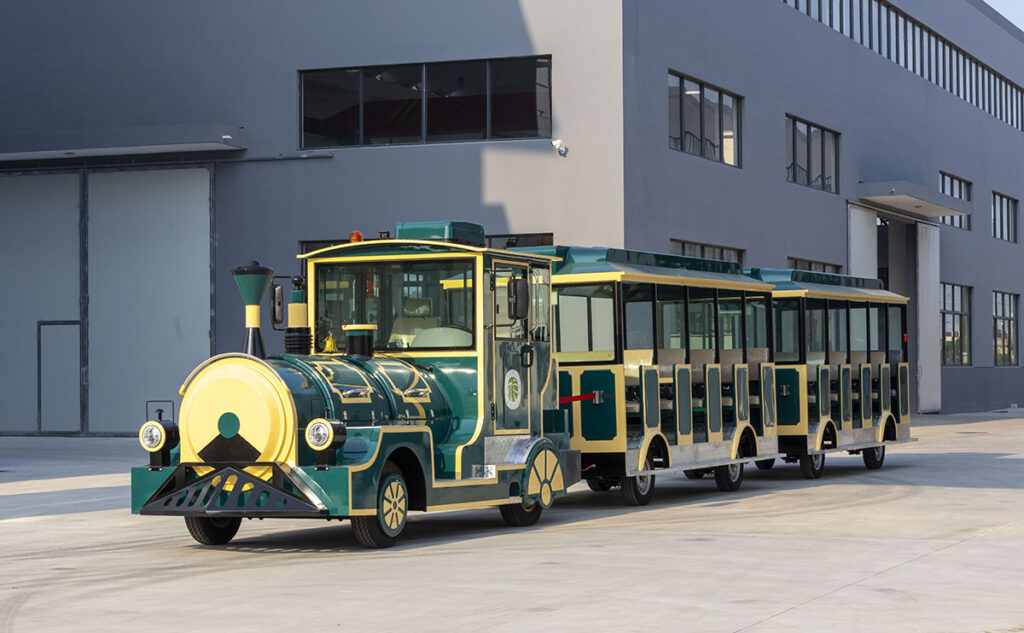
Professional trackless train manufacturers are primarily located in China, with established factories in industrial zones. Reputable companies have export experience, international certifications, and custom manufacturing capabilities. They typically operate from dedicated production facilities with quality control systems.
Identifying Quality Manufacturers
Through years of supplier evaluation, I’ve developed a reliable vetting process. Quality manufacturers share common characteristics that set them apart from less reputable suppliers.
Manufacturer Credentials to Verify
Always check these essential credentials:
- Business license and export permits
- ISO 9001 quality management certification
- CE certification for European markets
- Specific amusement ride certifications
- Previous export experience to your region
- Customer references and case studies
Manufacturing Capabilities Assessment
Evaluate their production capabilities:
| Capability | Importance | What to Look For |
|---|---|---|
| Custom Design | High | CAD design team, 3D modeling capability |
| Material Quality | Critical | Material certifications, supplier audits |
| Production Scale | Medium | Factory size, production capacity |
| Quality Control | Critical | QC processes, testing facilities |
| After-sales Support | High | Service network, spare parts availability |
Geographic Manufacturing Hubs
China has several manufacturing clusters:
- Zhejiang Province: Known for quality metal fabrication
- Guangdong Province: Electronics and control systems expertise
- Shandong Province: Heavy equipment manufacturing experience
- Jiangsu Province: Advanced engineering capabilities
My company, Wonderland, operates from Jinhua in Zhejiang Province. We’ve developed relationships with the best component suppliers in each region.
How much do trackless trains cost?
Pricing is often the first concern for buyers. Trackless train costs vary significantly based on specifications. Understanding the pricing structure helps budget planning and prevents unexpected expenses. The price range reflects different quality levels and feature sets.
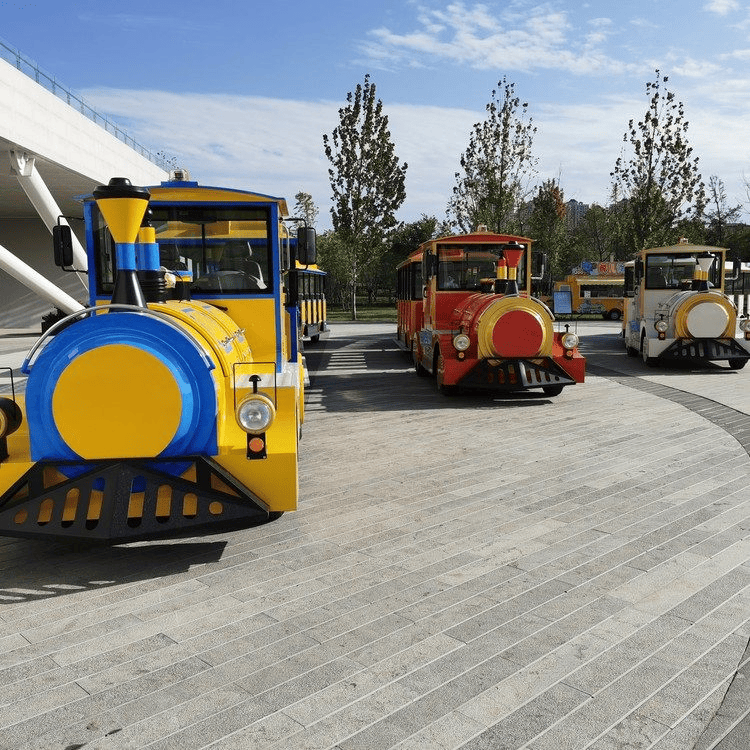
Trackless train prices range from $15,000 to $80,000 depending on capacity, power source, customization level, and quality standards. Basic 24-passenger models start around $15,000-25,000, while premium 42-passenger custom trains can cost $50,000-80,000. Additional features and certifications add to the final price.
Understanding Cost Components
I’ve helped hundreds of clients understand trackless train pricing. The total cost includes several components beyond the base vehicle price.
Primary Cost Factors
Several factors influence the final price:
- Passenger capacity (24-seat vs 42-seat models)
- Power source (battery vs diesel engine)
- Customization complexity (theming, branding, special features)
- Material quality (steel thickness, component brands)
- Certification requirements (regional safety standards)
Price Breakdown Example
Here’s a typical cost structure for a mid-range model:
| Component | Percentage | Cost Range |
|---|---|---|
| Chassis & Body | 40% | $6,000-12,000 |
| Power System | 25% | $3,750-7,500 |
| Control System | 15% | $2,250-4,500 |
| Customization | 10% | $1,500-3,000 |
| Certification | 5% | $750-1,500 |
| Shipping | 5% | $750-1,500 |
Long-term Cost Considerations
Beyond initial purchase, consider:
- Maintenance costs and spare parts pricing
- Battery replacement cycles (for electric models)
- Insurance and operational licensing fees
- Staff training requirements
- Potential revenue generation capacity
My experience shows that investing in quality upfront reduces long-term costs. Cheap trains often require frequent repairs and have shorter lifespans.
Can I use trackless train indoor?
Many venue operators ask about indoor applications. Shopping malls, convention centers, and indoor theme parks represent significant market opportunities. Indoor operation requires different considerations than outdoor use.
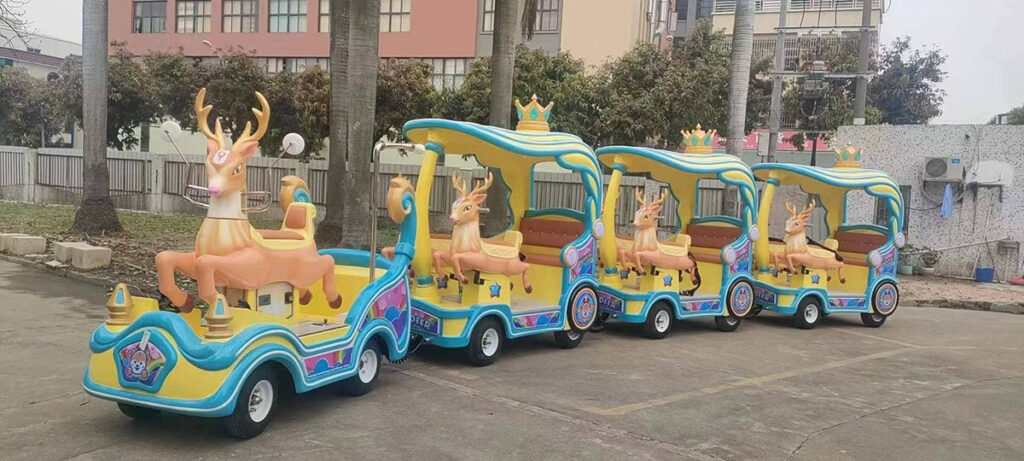
Trackless trains can operate indoors when they use electric power sources with zero emissions. Indoor models require special ventilation considerations, noise reduction features, and compact designs for maneuverability. Proper indoor operation requires attention to floor surfaces, clearance heights, and emergency evacuation planning.
Indoor Application Requirements
I’ve supplied trains for various indoor venues. Each environment presents unique challenges that require specialized solutions.
Indoor-Specific Design Features
Indoor trains need different specifications:
- Electric power only (no combustion engines)
- Reduced noise levels for indoor acoustics
- Lower emission control systems
- Compact turning radius for tight spaces
- Non-marking tires for floor protection
- Enhanced emergency braking systems
Venue-Specific Considerations
Different indoor environments have specific needs:
| Venue Type | Key Considerations | Recommended Features |
|---|---|---|
| Shopping Malls | Floor protection, quiet operation | Rubber tires, silent motors |
| Convention Centers | Quick passenger turnover | Multiple doors, efficient boarding |
| Indoor Theme Parks | Theming integration, child safety | Custom theming, safety barriers |
| Airports | Security compliance, luggage space | Security screening, luggage racks |
Safety and Regulatory Compliance
Indoor operation requires additional safety measures:
- Fire safety certification for indoor use
- Emergency evacuation procedures
- Air quality monitoring for enclosed spaces
- Maximum occupancy guidelines
- Emergency lighting and signage
My experience with indoor installations shows that proper planning ensures successful operation. The key is working with manufacturers who understand indoor requirements.
Who can customize trackless trains?
Customization transforms standard trains into unique attractions. Many buyers want trains that match their brand identity or theme. The customization process requires expertise in both design and engineering.
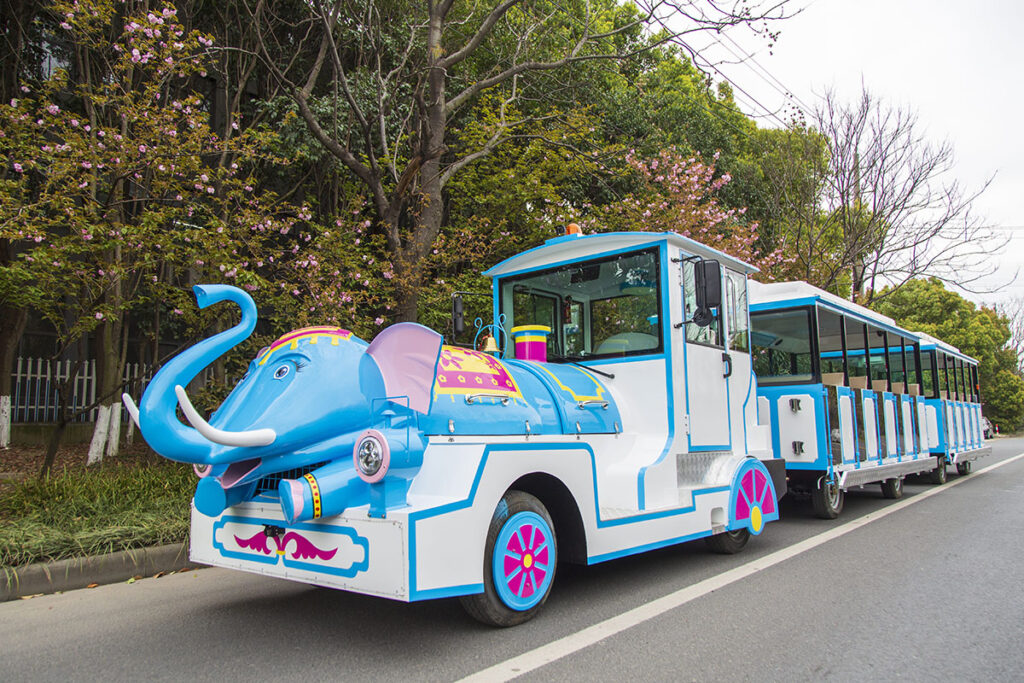
Professional trackless train manufacturers offer comprehensive customization services. They have design teams that can create custom bodywork, theming, branding integration, and special features. Customization capabilities vary by manufacturer, with experienced companies offering complete design-to-production services.
Customization Process Overview
I’ve managed numerous customization projects for clients worldwide. The process involves collaboration between the buyer and manufacturer to create unique solutions.
Customization Options Available
Manufacturers typically offer these customization services:
- Exterior Design: Custom body shapes, colors, graphics
- Interior Layout: Seating arrangements, passenger amenities
- Branding Integration: Logo placement, color matching
- Special Features: Sound systems, lighting, thematic elements
- Functional Modifications: Capacity changes, accessibility features
Customization Process Steps
The typical customization workflow:
- Design Consultation: Understanding client requirements and constraints
- Concept Development: Creating initial design concepts and 3D models
- Engineering Review: Ensuring design feasibility and safety compliance
- Prototype Development: Building mockups or scale models
- Production Planning: Finalizing specifications and production timeline
- Quality Assurance: Testing custom features before shipment
Choosing a Customization Partner
Select manufacturers with these capabilities:
- In-house design and engineering teams
- Experience with similar customization projects
- Quality control processes for custom work
- Clear communication and project management
- Reasonable customization timelines and costs
My company, Wonderland, specializes in custom trackless trains. We’ve created dinosaur-themed trains for prehistoric parks, princess carriages for fairy tale lands, and modern designs for urban attractions.
Conclusion
Purchasing trackless trains from China requires careful supplier selection, cost analysis, and customization planning. Proper research ensures you get quality products that meet your specific operational needs.
- “Safety of amusement rides and amusement devices — Part 1”, https\://www.iso.org/obp/ui/en/#!iso:std:73000:en. International amusement-ride safety standards, such as ISO 17842, set requirements for design, manufacture, operation, and inspection, supporting the need to obtain relevant product certification or compliance documentation before purchase. Evidence role: expert_consensus; source type: institution. Supports: Buyers should request product certifications when purchasing a trackless train from China.. Scope note: This supports the general importance of certification and safety compliance for amusement rides; the exact certificates required depend on the buyer’s jurisdiction and the train’s technical classification. ↩︎
- “Special Purpose Vehicles – WV Department of Transportation”, https\://transportation.wv.gov/DMV/Vehicle-Services/Pages/Special-Purpose-Vehicles.aspx. Regulatory materials on low-speed or special-purpose vehicles indicate that operation on public roads is generally conditional on equipment requirements and authorization by the relevant road authority; this supports the claim as a general regulatory principle rather than as a universal rule for all trackless trains. Evidence role: general_support; source type: government. Supports: Properly equipped trackless trains can operate on public roads when the operator obtains the required approvals.. Scope note: Rules vary substantially by jurisdiction and vehicle classification, so a source may support the conditional nature of road use without proving legality in every locality. ↩︎
- “Interpretation ID: nht76-4.41”, https\://www.nhtsa.gov/interpretations/nht76-441. NHTSA’s Federal Motor Vehicle Safety Standards establish safety requirements for motor vehicles and regulated equipment used on public roads, including lighting, braking, mirrors, warning devices, and related safety systems. Evidence role: general_support; source type: government. Supports: Road-legal trackless trains need specific safety features.. Scope note: This supports the need for regulated safety equipment in the U.S. context; classification and specific requirements for trackless trains may vary by state, vehicle design, and operating route. ↩︎